
Deep-Sea Anglerfish: The Glowing Predator of the Abyss
June 29, 2026 — ny_wk
Disclosure: some links above are affiliate links — if you buy through them I may earn a small commission at no extra cost to you. Thanks for supporting the channel!
Far below where sunlight dies, the deep-sea anglerfish drifts through total darkness wearing a single, hypnotic spark of living light on its head. That glow is not a trick of biology gone wild for show. It is a lure, a weapon, and the product of one of the strangest partnerships on Earth, in which a fish farms its own colony of glowing bacteria to murder dinner in the dark.
The abyss is the largest habitat on the planet and one of the most hostile. Below about 1,000 meters there is no sun, the water hovers near freezing, the pressure could crush a submarine, and food is so scarce that a single drifting meal might be the only one for weeks. To survive down here, the anglerfish became a masterpiece of grim efficiency, and almost everything about it sounds invented.
How the Deep-Sea Anglerfish Lights Up the Dark
The signature feature of the female anglerfish is the esca, a fleshy bulb dangling from a modified spine that arches over her mouth like a fishing rod. This rod, called the illicium, evolved from the first ray of the dorsal fin. The tip glows because it is packed with bioluminescent bacteria that the fish cannot make light without.
This is the part that stuns biologists. The anglerfish does not generate the light itself. Instead, the esca is a tiny living hotel, a gland filled with symbiotic bacteria that produce a cold blue-green glow through a chemical reaction. In return for shelter and nutrients, the bacteria do the one thing their host needs most in the dark: they shine.
The fish can control the display by widening or narrowing the pores of the esca and by pumping oxygen-rich blood to the bacteria, since the glow is an oxygen-dependent reaction. With a slight adjustment of blood flow, the lure can flicker, pulse, or dim. In the endless black of the deep, that pinprick of light is irresistible to small fish and crustaceans, which mistake it for food and swim straight toward a cavernous mouth lined with needle teeth.
Consider how alien this strategy is compared with the way we see. On land, a hunter relies on sunlight bouncing off its prey. In the deep sea there is no sunlight to bounce, so the anglerfish flipped the problem on its head. Instead of waiting to see prey, it makes prey come to it, turning the absence of light into the perfect stage for a single glowing point. Anything curious enough to investigate that light has already made a fatal mistake.
Some species push the deception even further. A few deep-sea anglerfish have long, branching filaments around the lure that can resemble drifting plankton or wriggling worms, sharpening the illusion of an easy meal. The glow is the headline, but the shape and movement of the lure are part of the con. It is one of nature's oldest tricks — bait on a hook — perfected in the dark millions of years before any human ever tied a line.
A Partnership Written Into the Genes
The bond between anglerfish and bacteria is so ancient and so tight that it has reshaped the bacteria themselves. When scientists sequenced the glowing microbes living inside anglerfish lures, they found genomes that had shrunk dramatically, having shed many of the genes a free-living bacterium would need to survive on its own in open water.
That genetic stripping is a tell-tale signature of deep symbiosis. The bacteria have effectively outsourced survival to their host, keeping the machinery for making light and little else. Yet curiously, they have not lost the ability to swim, which hints that young anglerfish acquire their glowing partners fresh from the surrounding seawater rather than inheriting them from their mother. A newborn anglerfish may begin life dark, then recruit its light source from the ocean around it.
It is worth correcting a popular myth here. The bacteria do not control the fish's behavior like puppet-masters. What the evidence shows is a tightly tuned mutual dependence: the host has evolved an organ purpose-built to house and feed the microbes, and the microbes have evolved to do nothing but glow inside it. Neither could thrive without the other, which is dramatic enough without the science fiction.
The Nightmare Mating Ritual: Sexual Parasitism
If the glowing lure is the anglerfish's headline act, its love life is the part that genuinely keeps marine biologists awake. In many deep-sea anglerfish species, the male and female are so different that early scientists catalogued them as entirely separate animals.
The female is the iconic monster, sometimes the length of a forearm, armed with the lure and the fangs. The male is a fraction of her size, in some species barely a centimeter long. He has no lure, often a shrunken gut, and a body built for one purpose: to find a female before he starves. He hunts her using enormous nostrils tuned to her species-specific scent and large eyes to spot her glow.
When he finds her, he bites down and never lets go. In the most extreme species, this is true sexual parasitism. The male's mouth fuses to the female's skin. Their tissues merge, their blood vessels connect, and he loses his eyes, his fins, and most of his internal organs. He becomes a permanent appendage, drawing nourishment directly from her bloodstream and offering nothing back but sperm on demand. A single female can carry several of these fused males at once.
| Trait | Female | Parasitic Male |
| Relative size | Large (up to tens of cm) | Tiny (sometimes ~1 cm) |
| Glowing lure | Yes | None |
| Role | Hunter and host | Permanent sperm supply |
| Fate after mating | Continues hunting | Fuses, degenerates, depends entirely on her |
Here lies a biological puzzle that took until recent years to crack. When two animals fuse and share blood, the immune system should reject the foreign tissue, exactly the way a human body attacks a mismatched organ transplant. Anglerfish should not be able to do this. Yet they do.
The answer, revealed by genome studies, is astonishing. These anglerfish have lost or disabled key genes of the adaptive immune system — the very genes that produce antibodies and killer T cells in nearly every other backbone-bearing animal. By switching off the defenses that would normally reject a fused partner, the anglerfish made permanent body-merging possible. In doing so, they became the only known vertebrates to thrive without a fully functioning adaptive immune system, trading immune protection for a guaranteed mate in an ocean where finding one is nearly impossible.
This evolutionary bargain reframes how we think about the immune system entirely. For a human, losing antibody-driven immunity would be a death sentence within days, leaving the body open to infection. The anglerfish survives it, which suggests the deep sea offers a very different microbial threat profile, and that whatever defenses these fish still rely on are unlike our own. Studying them may eventually teach medicine new lessons about transplant tolerance, since these animals solved the problem of accepting foreign tissue tens of millions of years before surgeons ever attempted it.
Surviving the Crushing Abyss
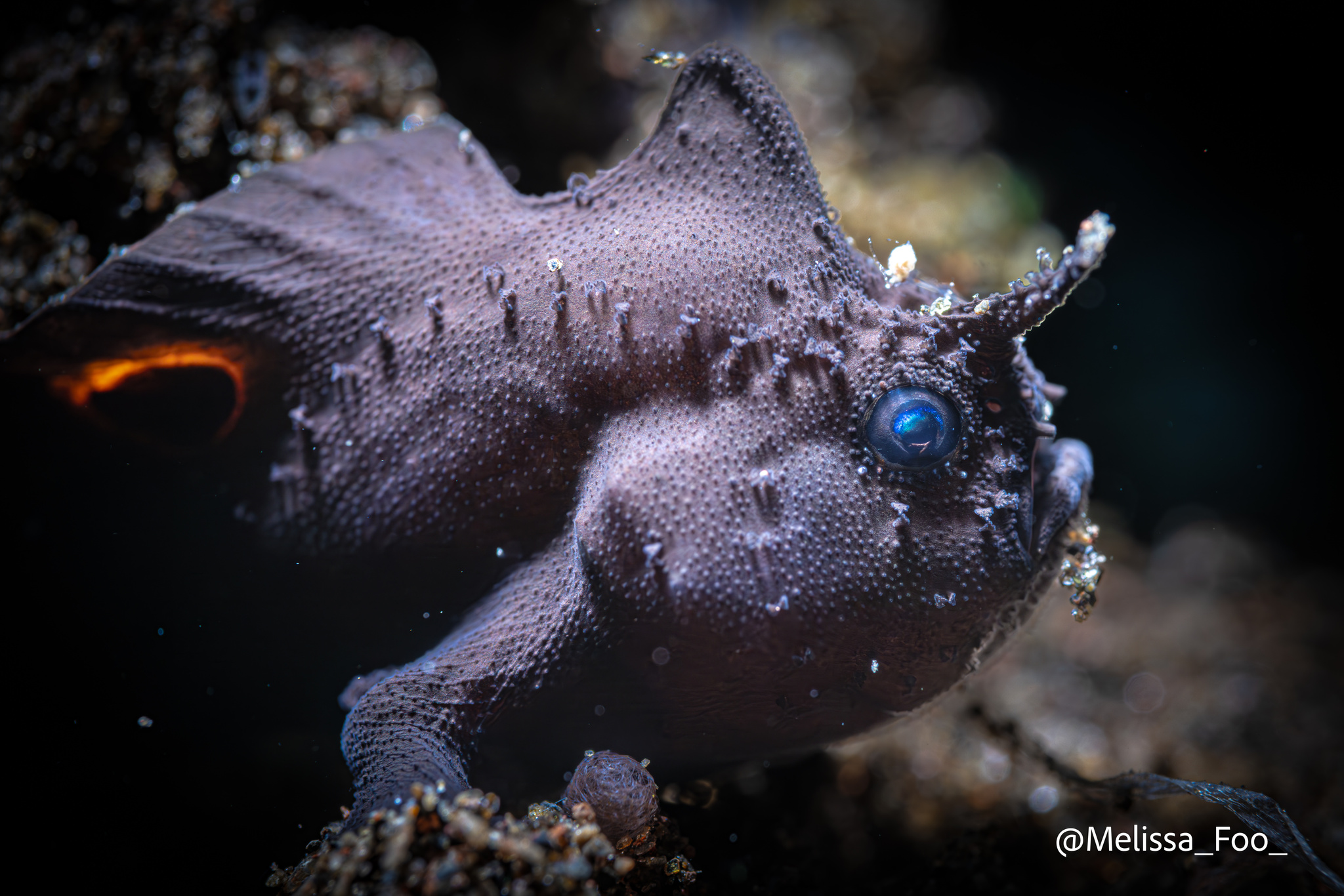
Everything about the anglerfish is shaped by scarcity. Because meals are rare and unpredictable, the female has an expandable stomach and jaws that can swallow prey larger than her own body, ensuring no encounter is wasted. Her dark, light-absorbing skin makes her nearly invisible except for that single glowing bead.
Most deep-sea anglerfish belong to the order Lophiiformes, with the classic abyssal forms grouped in the suborder Ceratioidei. There are well over a hundred known species, and because the deep ocean is so difficult to explore, new ones are still being discovered. Each captured specimen is a rare window into a world humans have barely glimpsed, since we have mapped more of the Moon's surface in detail than the floor of our own deep sea.
The anglerfish is not a horror invented to scare you. It is what happens when life is pushed to an extreme few environments on Earth can match, and it answers with light, fusion, and ferocity. In the abyss, beauty and nightmare turn out to be the same thing.
And the anglerfish is only one resident of this hidden world. The same crushing dark is home to gulper eels that unhinge their jaws, vampire squid that turn themselves inside out, and translucent creatures that have never known a shadow because they have never known light. Each is a reminder that the most extreme life on our planet is not found on some distant world but in the water beneath our own ships, waiting for the next deep-diving camera to find it.
5 Mind-Blowing Takeaways
- The anglerfish cannot make its own light — it farms a colony of glowing symbiotic bacteria inside a lure organ called the esca.
- It controls its glow with blood flow, feeding the bacteria oxygen to make them shine and dimming the light by cutting it off.
- The glowing bacteria have shrunken genomes, having shed survival genes because they depend so completely on their host.
- Males are sexual parasites that bite, fuse, and merge bloodstreams with the much larger female, becoming a living sperm supply.
- Anglerfish disabled their own adaptive immune system to allow tissue fusion, making them the only known vertebrates to live without one fully intact.
Frequently Asked Questions
Does the deep-sea anglerfish make its own light?
No. The light comes from bioluminescent bacteria living inside the lure on the female's head. The fish provides shelter, nutrients, and oxygen, and the bacteria provide the glow in return — a true mutual partnership.
Why do male anglerfish fuse to females?
In the pitch-black abyss, finding a mate is extremely rare. By permanently fusing to a female and merging bloodstreams, the tiny male guarantees he can fertilize her eggs whenever she is ready, removing the need to ever search again.
How does the male survive fused to the female's body?
Once attached, the male draws all of his nourishment directly from the female's bloodstream. He loses his eyes and most organs, becoming a permanent appendage. This only works because anglerfish have evolved to switch off the immune defenses that would normally reject foreign tissue.
Where does the deep-sea anglerfish live?
It lives in the deep, dark ocean, typically below 1,000 meters in the bathyal and abyssal zones where no sunlight reaches. Cold temperatures, crushing pressure, and scarce food make it one of the harshest habitats on the planet.
The deep ocean is still writing its strangest stories in the dark — follow The Fact Factory and let us bring the abyss into the light, one jaw-dropping fact at a time.
🤯 Love facts that rewire your brain? The Fact Factory drops a new one every single day.
- 📺 YouTube: @factsandstoriestube — subscribe for daily fact shorts
- 📸 Instagram: @factfactory57
- 📘 Facebook: The Fact Factory