
Statue of Unity: Why 182 Meters Makes It Earth's Tallest
June 30, 2026 — ny_wk
Disclosure: some links above are affiliate links — if you buy through them I may earn a small commission at no extra cost to you. Thanks for supporting the channel!
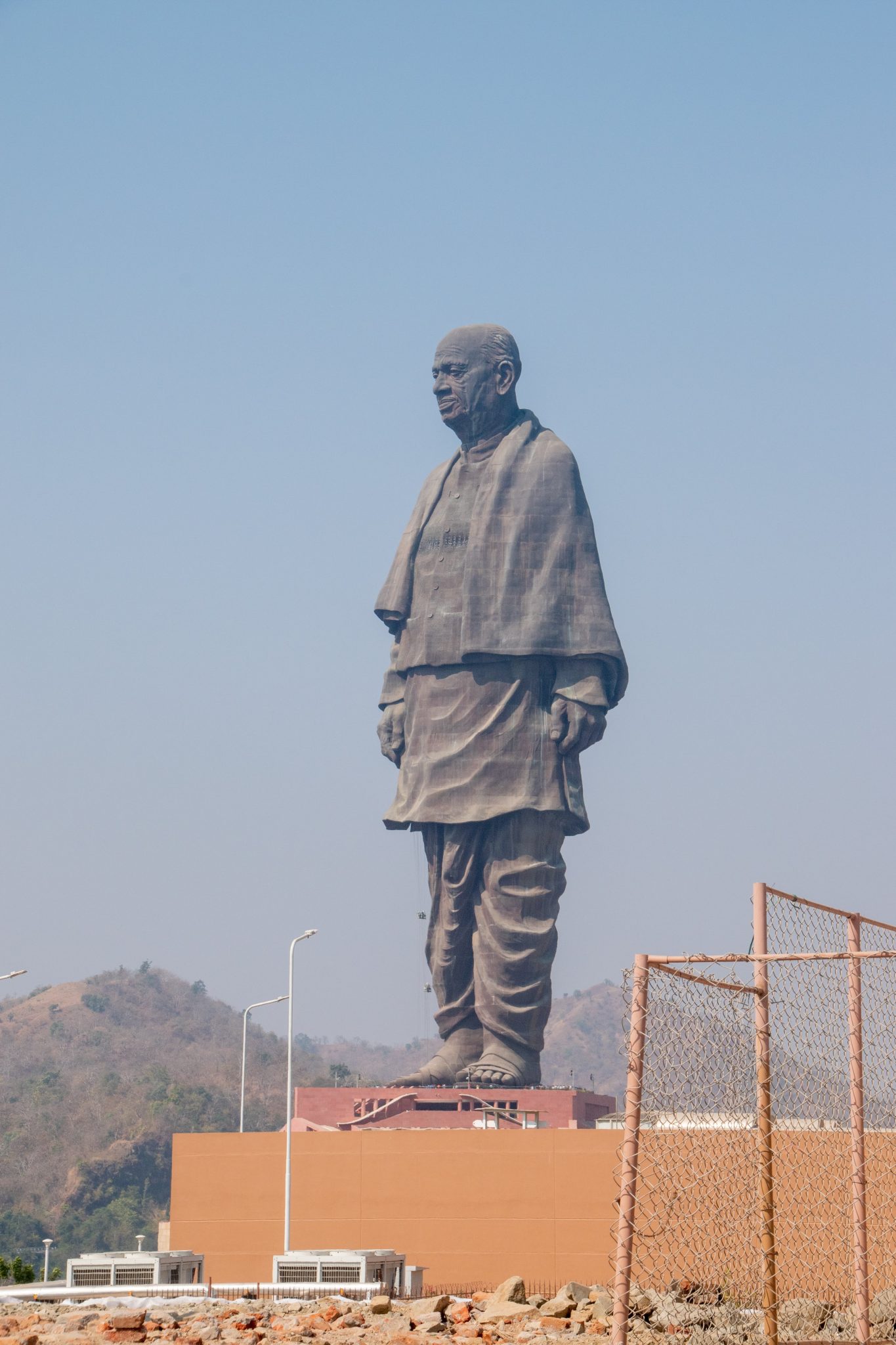
Stand at its feet and crane your neck, and your eyes simply run out of statue before they run out of sky. The Statue of Unity rises 182 meters into the air over the Narmada River in Gujarat, India — making it the tallest statue on Earth, nearly twice the height of New York's Statue of Liberty and taller than a 50-story skyscraper. That single number, 182 meters, was no accident: it is a deliberate, encoded tribute to one of modern history's great unifiers.
Behind the bronze-cladded colossus sits a story of bullet-train ambition, melted-down farm tools, hurricane-grade engineering, and a man who quietly stitched a fractured nation together. Here is the full picture of what 182 meters really means — and why it stands exactly that tall.
Why the Statue of Unity Stands Exactly 182 Meters Tall
The figure is not a round, arbitrary engineering target. The 182 meters directly mirrors the 182 seats in the Gujarat Legislative Assembly — a regional nod baked into a national monument. The statue honors Sardar Vallabhbhai Patel, the iron-willed first Deputy Prime Minister and Home Minister of independent India, the man who persuaded and pressured more than 560 princely states to join the new republic in 1947.
Patel was nicknamed the "Iron Man of India," and his official title — Statue of Unity — captures his life's defining achievement: forging a single country out of a patchwork of kingdoms that the departing British had left free to go their own way. Without his diplomacy and steel, the map of South Asia might look radically different today.
Measure the monument from the ground to the top of Patel's head and you get 182 meters of figure alone. Add the base and plinth on which he stands and the total structure soars to roughly 240 meters — but the statue itself, the part that broke the world record, is the 182. It comfortably surpassed the previous record-holder, China's Spring Temple Buddha, when it was inaugurated on 31 October 2018, on what would have been Patel's 143rd birthday.
How Engineers Built the World's Tallest Statue
A figure this tall is not sculpted so much as engineered like a high-rise tower with a human shape draped over it. At its heart are two enormous reinforced-concrete cores that act like the spine of a skyscraper, surrounded by a structural steel framework, all wrapped in a skin of bronze cladding made up of thousands of individually cast panels.
The numbers are staggering. The project consumed roughly 70,000 tonnes of cement, around 25,000 tonnes of steel, and about 1,700 tonnes of bronze for the outer skin. Crews used the equivalent of a small industrial city's worth of material to keep a 182-meter human form standing in open air beside a major river.
One of the most quietly brilliant features is hidden inside: a pair of high-speed elevators carry visitors up to a viewing gallery set at around 153 meters — roughly chest height of the statue — where up to 200 people at a time can look out across the Narmada Dam and the Satpura and Vindhya mountain ranges. You are, quite literally, standing inside the chest of the Iron Man.
Designed to Survive Earthquakes and 200 km/h Winds
A slender 182-meter figure is exposed to brutal forces — wind, seismic shudders, and the relentless tug of gravity on bronze and steel. Engineers designed the Statue of Unity to withstand wind speeds of up to about 220 km/h and earthquakes measuring up to magnitude 6.5, an essential precaution in a region with real seismic history.
To manage sway and vibration, the structure incorporates tuned mass dampers — the same technology that keeps the world's tallest skyscrapers from rocking their occupants seasick. The result is a monument built to stand for centuries, not decades.
The Iron Man Behind the Monument
To understand why India built the tallest statue on the planet, you have to understand the quiet emergency the country faced in 1947. When the British left, they did not hand over a single tidy nation. They left behind British-ruled provinces plus more than 560 princely states, each technically free to join India, join Pakistan, or attempt to stand alone. A wrong roll of the dice could have shattered the subcontinent into dozens of squabbling fragments.
Into that chaos stepped Sardar Vallabhbhai Patel, a lawyer-turned-statesman with a reputation for blunt talk and unbreakable resolve. As Home Minister, he combined patient persuasion with firm pressure, convincing ruler after ruler to sign the Instrument of Accession and fold their kingdoms into the new India. Where diplomacy stalled, as in Hyderabad and Junagadh, decisive action followed. Within a few short years, the map of India had been knitted into one country.
That achievement — turning a fractured patchwork into a unified republic almost without bloodshed on the scale many feared — is exactly what the monument celebrates. The name says it plainly: this is a Statue of Unity, and its sheer impossible height is a measure of how impossible his task once seemed. Honoring him with anything smaller would have understated the scale of what he pulled off.
The People's Iron: How Farm Tools Helped Forge It
Perhaps the most poetic chapter of the build was the "Statue of Unity" iron collection drive. Organizers launched a nationwide campaign asking farmers across roughly 169,000 villages in India to donate used iron farming implements — old plows, sickles, and tools — to be symbolically incorporated into the project.
The campaign gathered an estimated several thousand tonnes of scrap iron. While the donated metal was ultimately used in associated construction rather than the visible bronze skin, the symbolism was the point: the Iron Man of India would be raised, in part, from the iron of India's own working farmers. A monument to unity, literally assembled from contributions stretching from one end of the country to the other.
The drive also doubled as a feat of logistics and outreach, knitting hundreds of thousands of rural communities into a single shared project — an echo, in metal, of the political unification it commemorates.
How 182 Meters Compares to the World's Famous Giants
Height is easy to claim and hard to grasp until you line the contenders up side by side. The Statue of Unity does not just edge out its rivals — in many cases it towers over them.
| Statue | Location | Statue Height |
| Statue of Unity | Gujarat, India | 182 m |
| Spring Temple Buddha | Henan, China | ~128 m |
| Laykyun Sekkya Buddha | Monywa, Myanmar | ~116 m |
| Ushiku Daibutsu | Ibaraki, Japan | ~100 m |
| Christ the Redeemer | Rio de Janeiro, Brazil | ~30 m |
| Statue of Liberty | New York, USA | ~46 m |
Place the Statue of Unity next to the Statue of Liberty and the gap is almost comic: Patel's figure is roughly four times taller than Lady Liberty's copper body. Stand it beside Christ the Redeemer in Rio and the Brazilian icon barely reaches its knees. Even the soaring Spring Temple Buddha — the giant it dethroned — falls more than 50 meters short.
To put 182 meters in everyday terms: it is taller than the Great Pyramid of Giza (about 139 meters today), and stacking nearly two Statues of Liberty on top of each other still would not reach the top of Patel's head.
What It Is Like to Visit the 182-Meter Giant
The Statue of Unity is not just a record on paper — it has become one of India's most visited attractions, drawing millions of travelers to a once-remote stretch of the Narmada Valley. On busy days, tens of thousands of people arrive to stand at the base, ride the elevators, and gaze out from inside the chest of the Iron Man.
The experience is built like a destination rather than a single photo stop. Visitors can explore a museum and exhibition hall documenting Patel's life, walk a riverside promenade, and take in a nightly laser and light show projected onto the bronze figure. A flower-filled Valley of Flowers garden, a jungle safari park, and viewpoints over the Sardar Sarovar Dam round out the site.
The headline experience remains the ascent to the 153-meter viewing gallery. From there the surrounding mountains, reservoir, and dam unfold in every direction, and the scale of the figure becomes visceral: you are looking out through openings near the statue's chest, suspended higher than almost any building you have ever entered. Few monuments let you climb inside a human form and look at the world through its heart.
5 Mind-Blowing Takeaways
- 182 meters is a code, not a coincidence — it mirrors the 182 seats of Gujarat's Legislative Assembly, embedding a regional tribute into a world-record monument.
- It is the tallest statue on Earth, nearly four times the height of the Statue of Liberty and dwarfing Christ the Redeemer many times over.
- You can stand inside its chest — a viewing gallery at roughly 153 meters holds up to 200 people overlooking the Narmada Dam and surrounding mountains.
- It was built to take a beating, engineered to survive 220 km/h winds and a magnitude-6.5 earthquake using tuned mass dampers.
- Farmers across 169,000 villages donated used iron tools for the project — the Iron Man of India raised, symbolically, from the iron of India's own fields.
Frequently Asked Questions
How tall is the Statue of Unity exactly?
The statue figure itself is 182 meters tall, measured from the ground to the top of the head. Including its base and plinth, the total structure reaches roughly 240 meters, but the record-breaking measurement is the 182-meter statue.
Who is the Statue of Unity dedicated to?
It honors Sardar Vallabhbhai Patel, India's first Deputy Prime Minister and Home Minister, known as the "Iron Man of India" for unifying more than 560 princely states into a single nation after independence in 1947.
Where is the Statue of Unity located?
It stands on an island near the Sardar Sarovar Dam on the Narmada River in the state of Gujarat, India, surrounded by the Satpura and Vindhya mountain ranges.
What makes 182 meters significant?
The number is a deliberate tribute: it matches the 182 seats in the Gujarat Legislative Assembly. It also made the statue the tallest in the world when it opened on 31 October 2018, surpassing China's Spring Temple Buddha.
Love giant feats of engineering and the hidden stories behind the world's record-breakers? Follow The Fact Factory for more mind-bending facts that change how you see the world.
🤯 Love facts that rewire your brain? The Fact Factory drops a new one every single day.
- 📺 YouTube: @factsandstoriestube — subscribe for daily fact shorts
- 📸 Instagram: @factfactory57
- 📘 Facebook: The Fact Factory