
July 11, 2026 — ny_wk

Disclosure: some links above are affiliate links — if you buy through them I may earn a small commission at no extra cost to you. Thanks for supporting the channel!
Ever wondered how bats, those incredible creatures of the night, navigate and hunt in utter darkness? Forget superpowers; it's pure, astonishing biology. These nocturnal masters literally ‘see’ with sound, a phenomenon packed with mind-blowing bat echolocation facts that redefine what 'vision' truly means. This isn't just a quirky animal trick; it's a sophisticated biological sonar system, an unseen symphony that allows them to dominate the night sky with unparalleled precision.
The Echo Whisperers: What Exactly is Echolocation?
Let's kick things off with the absolute basics. What are we even talking about when we say "echolocation"? it's pretty simple: a bat (or other echolocating animal) emits a sound, and then listens for the echo that bounces back from objects in its environment. Think of it like shouting in a canyon and waiting for the sound to return, but on an incredibly rapid, high-frequency, and sophisticated scale.
Most bats use their larynx to generate these sounds, similar to how we speak, but their vocal cords and associated muscles are incredibly specialized, allowing them to produce sounds at frequencies far beyond human hearing – often ranging from 20 kilohertz (kHz) up to an astounding 200 kHz, sometimes even higher! For context, the average human can only hear up to about 20 kHz. That's a massive sonic world we're completely deaf to.
The sounds aren't just random squeaks; they're precisely structured calls, often delivered in short pulses. The bat's brain then processes the returning echoes, extracting vital information like the distance to an object (based on the time delay between emission and echo return), its size and shape (from the echo's strength and spectral content), and even its texture and movement (from subtle changes in frequency and phase).
Why it matters:
This isn't just a cool party trick; it's the fundamental adaptation that allows bats to thrive in environments where sight is useless. Imagine trying to catch a tiny, darting mosquito in a pitch-black room – impossible for us, but a nightly feast for a bat. Their entire ecological niche, their very survival, hinges on this remarkable sensory ability. Without it, the night sky would be a barren, dangerous place for them.
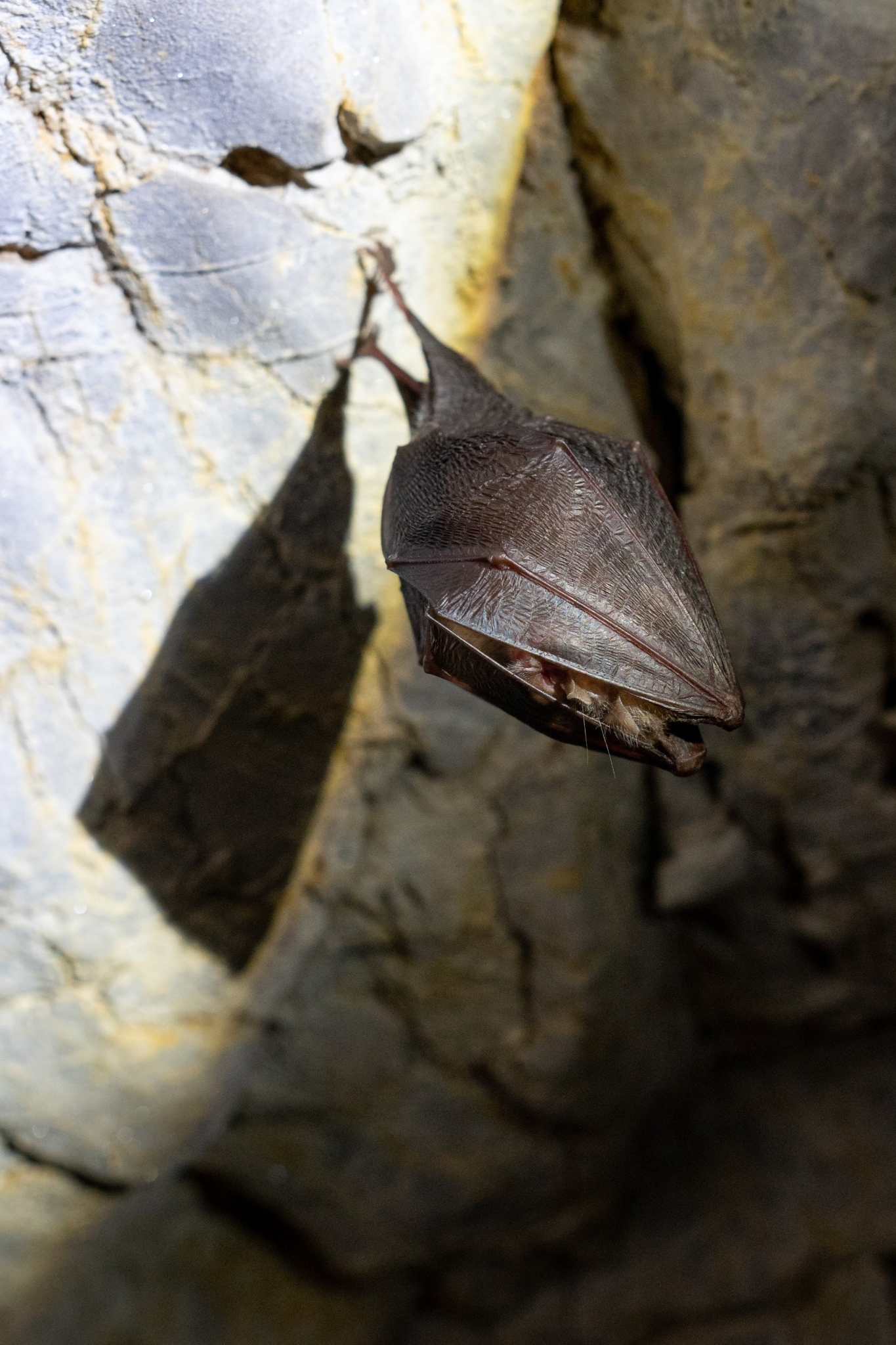
A Sonic Palette: The Bat's Diverse Echolocation Toolkit
You might think all echolocation sounds are the same, but that's like saying all human languages sound alike. Bats employ a stunning array of sonic strategies, tailoring their calls to specific situations and prey. This is where the bat echolocation facts truly get wild.
Generally, bat calls fall into two broad categories, though many bats use a combination:
- Constant Frequency (CF) Calls: As the name suggests, these calls are emitted at a steady, unchanging frequency.
- Frequency Modulated (FM) Calls: These calls sweep across a range of frequencies, typically starting high and dropping rapidly.
Let's look at some examples:
-
The Master of the Doppler Effect: Horseshoe Bats (Family Rhinolophidae) and Old World Leaf-nosed Bats (Family Hipposideridae).
These bats often use long, narrowband CF calls. Why? Because a constant frequency is ideal for detecting the Doppler effect. If an insect is flying towards or away from the bat, the frequency of the returning echo will shift – higher if approaching, lower if receding. By precisely measuring these shifts, a horseshoe bat can not only detect a tiny insect, but also calculate its flight speed and even the flapping rate of its wings! This is crucial for identifying tasty, live prey from stationary objects.
Imagine being able to "see" the exact speed and direction of a single gnat's wingbeats in a forest canopy. That's a horseshoe bat's daily reality.
-
The Versatile Prospector: Myotis Bats (e.g., Little Brown Bat, Myotis lucifugus).
Many common bats, like the highly successful Myotis genus, primarily use broadband, FM calls. These rapid, sweeping calls provide excellent information about the range and fine detail of objects. The different frequencies within the sweep reflect off objects at slightly different times, creating a detailed "signature" that the bat's brain can interpret. This is perfect for navigating cluttered environments like dense forests or catching fast-moving insects in open air.
When a Myotis bat detects prey, its call rate rapidly increases, sometimes emitting over 100 calls per second! This "terminal buzz" is like a rapid-fire sonic scan, allowing it to pinpoint the exact location of its meal with incredible accuracy right before capture.
Why it matters:
This diversity in call structure is a sign of the evolutionary pressures bats have faced. Different hunting strategies, habitats, and prey types demand different sensory solutions. Whether it's pinpointing a fluttering moth in the air or snagging a crawling beetle from a leaf, the bat has a sonic tool designed for the job. It showcases an incredible biological adaptability, proving that there's no single "best" way to echolocate, only the best way for a particular bat in a particular situation.
The Bat's Brain: Crafting a World from Echoes
Generating the sound and listening for the echo is only half the story. The real magic, the part that truly allows bats to 'see' with their ears, happens in their brains. This isn't just passive listening; it's active construction of a detailed, 3D world, and the neural mechanisms involved are nothing short of astonishing. These brain-based bat echolocation facts are a peak into incredible neuroscience.
When an echo returns, it contains a treasure trove of information. The bat's auditory system and brain are specialized to extract this data with phenomenal speed and precision:
- Time Difference (Range): The longer it takes for an echo to return, the further away the object. Bat brains have neurons precisely tuned to measure these minute time differences, allowing them to calculate distance with centimeter-level accuracy, even for objects just a few milliseconds away. Think about how quickly sound travels – to measure differences this small is mind-boggling.
- Interaural Time and Intensity Differences (Direction): How does a bat know *where* an object is? Like us, they use the slight difference in when a sound arrives at each ear (interaural time difference) and how loud it is in each ear (interaural intensity difference). But bats have taken this to an extreme. Their ears are often shaped asymmetrically or can be moved independently, allowing them to fine-tune their reception and pinpoint the direction of an echo with incredible accuracy. Imagine tilting your head and swiveling your ears like radar dishes – that’s essentially what a bat is doing.
- Frequency and Harmonic Analysis (Object Characterization): The way sound reflects off an object changes its frequency content. A hard, smooth surface will reflect differently than a soft, fuzzy one. Bat brains are experts at analyzing these subtle shifts, allowing them to distinguish between a leaf, a branch, and a moth, sometimes even identifying the species of insect based on its unique echo signature. Some bats can even differentiate between the body and the wings of an insect.
- Doppler Shift Compensation: This is where it gets truly wild, especially for our CF-using bats. As a bat flies, its own movement causes a Doppler shift in its emitted call. And if its prey is also moving, that creates another shift in the echo. To correctly interpret the prey's movement, the bat's brain (and often its vocal system) actually compensates for its own flight speed, adjusting its emitted call frequency so that the returning echo from its prey falls into a very narrow, highly sensitive "acoustic fovea" – a sweet spot where its hearing is most acute. It's like having an internal, biological auto-tuning mechanism running constantly.
The auditory cortex of a bat is massively developed and organized in ways that directly reflect these specialized processing tasks. Neuroscientists have mapped "auditory maps" in bat brains that represent distance, velocity, and angular position, much like our visual cortex maps spatial information. It's a true sensory marvel, crafting a detailed, dynamic picture of the world out of invisible sound waves.
Why it matters:
This complex neural processing isn't just about avoiding collisions; it's about building an incredibly rich and detailed understanding of their environment in real-time. It allows bats to not only survive but to thrive in some of the most challenging sensory conditions on Earth. It’s a profound example of how evolution can sculpt the brain to create entirely new forms of perception, teaching us about the fundamental plasticity and power of neural networks.

Echolocation in Action: From Hunting to Hiding
So, we've talked about the sounds and the brainpower. Now, let's put it all together and see echolocation as it plays out in a bat's daily (or rather, nightly) life. Trust me, it's not just a fancy trick; it's a dynamic, adaptable strategy for every aspect of their existence.
Hunting a Meal: The Three Phases of Pursuit
Watching a bat hunt (via high-speed camera, of course) is like witnessing an aerial ballet driven by sound. Researchers typically break down the hunting process into distinct phases:
- Search Phase: A bat starts its hunt by emitting relatively low-frequency, long-range calls at a slower rate (around 10-20 calls per second). These calls are designed to cover a wide area, scanning for any potential echoes from prey. It's like a wide-angle searchlight.
- Approach Phase: Once a potential target is detected (say, a moth), the bat hones in. It increases its call rate and often switches to higher frequencies and shorter call durations. The calls become more focused and provide more detailed information, like zooming in with a camera. The Big Brown Bat (Eptesicus fuscus), a common species, will transition from ~10 calls/second to ~40 calls/second when it detects a moth.
- Terminal Phase (or "Buzz"): Just before intercepting the prey, the bat enters its "terminal buzz." The call rate skyrockets, sometimes reaching 100-200 calls per second, and the calls become incredibly short. This rapid-fire burst of information is like a continuous, high-resolution sonic snapshot, allowing the bat to precisely track the prey's final evasive maneuvers and adjust its own trajectory for a successful capture. This phase might last only a few tenths of a second. Imagine your brain processing 200 distinct pieces of spatial information *per second* to make a precise grab in the dark. That's a bat's Tuesday night.
Navigating a Maze: Avoiding Obstacles
Beyond hunting, echolocation is critical for general navigation. Bats fly through dense forests, complex caves, and cluttered urban environments without bumping into objects. Their sonic 'vision' provides a detailed map of their surroundings, allowing them to perceive trees, branches, cave walls, and even thin wires. Early experiments with bats flying through a maze of wires demonstrated their uncanny ability to avoid obstacles, even when blindfolded, as long as their ears and mouths were unobstructed. This is one of the foundational bat echolocation facts that first shocked scientists.
Social Echolocation and Communication
While primarily for navigation and hunting, echolocation calls can also carry social information. Bats can sometimes identify individuals by their call signatures, and variations in calls can signal territoriality, alarm, or even social cohesion within a colony. Imagine a crowded cave with thousands of bats all echolocating – how do they avoid jamming each other's signals? Researchers are still unraveling this puzzle, but it involves individual frequency preferences, spatial separation, and likely very sophisticated neural filtering.
Why it matters:
Echolocation is not a static skill; it's a dynamic, actively managed sensory system that adapts to every moment of a bat's life. It's what defines their ecological role as nocturnal insect predators and pollinators, contributing immensely to ecosystem health by controlling insect populations and aiding plant reproduction. The sheer flexibility and precision of this system are a masterclass in natural engineering, demonstrating how a specialized sense can truly shape an entire species' existence.
The Earliest Detectors: Specialized Ears and Noses
We've talked about what bats emit and how their brains process, but let's not overlook the incredible receivers: their ears and, for some species, their noses! These structures are far from simple; they are highly specialized instruments designed to capture, amplify, and direct sound waves with unparalleled efficiency. The diverse ear shapes and nose-leaf structures are among the most visually striking bat echolocation facts.
Take a moment to look at photos of different bat species. You'll immediately notice the incredible diversity in their head structures:
- The Pinna (External Ear): These aren't just for show. A bat's pinna (the external ear flap) is often large, complexly folded, and highly mobile. It acts like a parabolic dish, focusing faint echoes towards the inner ear. The folds and ridges within the pinna create unique acoustic filters that help the bat distinguish sounds coming from different angles and even different elevations. Some bats can swivel their ears independently, effectively "scanning" the environment for echoes.
- The Tragus (Inner Ear Flap): Many bats possess a small, often pointed flap of skin inside their ear, called the tragus. For a long time, its function was debated, but research suggests it plays a crucial role in vertical localization – helping bats determine if an object is above or below them. It does this by creating acoustic shadows and reflections that vary depending on the sound's angle of arrival.
- The Nose-leaf: Not all bats emit sound from their mouths. Many species, particularly the Horseshoe bats and Old World Leaf-nosed bats (mentioned earlier for their CF calls), emit their echolocation calls through their nostrils. But these aren't just ordinary nostrils; they are surrounded by elaborate, fleshy structures known as nose-leaves. These nose-leaves are incredibly varied in shape – from simple flaps to complex, multi-layered structures – and act like a sophisticated megaphone, directing and shaping the ultrasonic beam into a precise, focused cone.
The morphology of these structures is highly correlated with a bat's hunting strategy and habitat. A bat that hunts insects in open air might have simpler, more aerodynamic ears, while a bat that gleans insects from vegetation (like the Pallid Bat, Antrozous pallidus, which can even hear insect footsteps on the ground) might have enormous, highly sensitive ears designed to pick up the faintest echoes and passively listen for prey-generated sounds.
This anatomical specialization extends internally as well. Bat ears contain highly sensitive inner ear structures, including a cochlea adapted to detect rapid frequency changes and an auditory nerve capable of transmitting vast amounts of information to the brain at incredible speeds. The muscles surrounding the middle ear are also specialized to contract rapidly, protecting the bat's own delicate hearing apparatus from the extremely loud sounds it produces (which can exceed 110-140 decibels at the source – louder than a jet engine!).
Why it matters:
The exquisite specialization of a bat's ears and nose-leaves underscores the evolutionary pressure to optimize every component of their echolocation system. These aren't just passive sensors; they are dynamic, directional, and finely tuned instruments that enable bats to literally sculpt their sensory input, extracting the maximum amount of information from every returning echo. They are physical manifestations of the unseen symphony, channeling invisible sound into a vivid mental picture.

Echolocation's Legacy: Human Inspiration and Unanswered Mysteries
The study of bat echolocation isn't just a fascinating dive into the animal kingdom; it has profoundly influenced human innovation and continues to inspire new frontiers in science and technology. Many of these bat echolocation facts have direct applications to our lives.
From Bats to Breakthroughs: Human Applications
The principles of echolocation laid the groundwork for many technologies we use today:
- Sonar: Perhaps the most obvious parallel. Sonar (Sound Navigation And Ranging) technology, developed significantly during World War I and II, uses sound waves to detect objects underwater. It's used by ships, submarines, and for mapping the ocean floor. The fundamental concept of emitting sound and listening for echoes is directly analogous to bat echolocation.
- Medical Ultrasound: This non-invasive diagnostic tool uses high-frequency sound waves to create images of internal body structures, from developing fetuses to organs and blood vessels. Just like a bat's brain interprets echoes to form an image, ultrasound machines process reflected sound to create visual representations.
- Autonomous Vehicles and Robotics: Engineers designing self-driving cars and advanced robots are constantly looking for robust sensor systems. Ultrasonic sensors are used in parking assist systems and for short-range obstacle detection. More advanced research is exploring how to mimic the sophisticated, dynamic echolocation strategies of bats to create robots that can navigate complex, unpredictable environments with greater autonomy and precision.
- Accessibility Aids: For visually impaired individuals, devices that translate ultrasonic echoes into tactile or auditory cues can help them perceive their surroundings, effectively granting them a form of "synthetic echolocation."
The Unanswered Questions: Mysteries of the Sonic World
Despite decades of intense research, bats still hold many secrets. Scientists continue to unravel the complexities of their sonic world:
- The "Cocktail Party Problem": Imagine a cave with thousands of bats all echolocating simultaneously. How does an individual bat distinguish its own echoes from the cacophony of thousands of other bats' calls and echoes? This is known as the "cocktail party problem" in human auditory science, and bats appear to have remarkably effective solutions, likely involving individual frequency signatures, active jamming avoidance, and incredible neural filtering.
- Beyond Insects: While most research focuses on insectivorous bats, how do species that eat fruit, nectar, or even fish use echolocation? Fish-eating bats, for instance, can detect tiny ripples on the water's surface made by swimming fish.
- Evolutionary Origins: How did echolocation evolve? Did it arise once and diversify, or did it evolve multiple times independently in different bat lineages? Genetic evidence suggests some fascinating, complex evolutionary pathways.
Why it matters:
The enduring mystery and practical applications of bat echolocation highlight its profound significance. It reminds us that nature is the ultimate innovator, constantly presenting solutions that can inspire our own technological advancements. As we continue to study these incredible creatures, we not only gain a deeper appreciation for their unique sensory world but also open up principles that can lead to the next generation of human-made wonders. The unseen symphony continues to play, full of lessons for those who listen.
Key Takeaways
- Bats 'see' their world by emitting high-frequency sounds and interpreting the echoes, a process called echolocation.
- They use diverse call types (Constant Frequency and Frequency Modulated) to gather different information, tailoring their sonic toolkit to specific prey and environments.
- A bat's brain performs incredible feats of neural processing, interpreting echo time delays (distance), intensity/frequency differences (direction), and Doppler shifts (movement) to construct a detailed 3D map.
- Echolocation is a dynamic process, changing from a search phase to a rapid terminal buzz when hunting, enabling astonishing precision in capturing prey and navigating complex spaces.
- Specialized anatomical structures like highly mobile pinnas (ears) and unique nose-leaves amplify and direct sound, fine-tuning the bat's reception for unparalleled sensory detail.
Frequently Asked Questions
How far can a bat 'see' with echolocation?
The effective range of a bat's echolocation varies greatly depending on the bat species, the frequency and intensity of its calls, and environmental factors. For many insectivorous bats, they can typically detect insects up to about 5-20 meters (16-65 feet) away, though some can detect larger objects at greater distances. The precision of their 'vision' is highest at closer ranges, especially during the "terminal buzz" phase when they are about to capture prey.
Do all bats use echolocation?
No, not all bats use echolocation. While the vast majority of bat species (the microbats, or suborder Microchiroptera) rely heavily on echolocation, the Megabats (suborder Megachiroptera), also known as fruit bats or flying foxes, generally do not. Megabats primarily navigate and find food using their excellent eyesight and keen sense of smell, similar to many birds and other mammals. However, one genus of megabat, the Rousettus, is an exception, using a simple form of echolocation with tongue clicks.
Can humans hear bat echolocation?
Generally, no. Most bat echolocation calls are at ultrasonic frequencies, meaning they are above the range of human hearing (which typically caps around 20 kilohertz). However, some bat calls, particularly the lower-frequency calls of certain species, might be audible to humans with exceptional high-frequency hearing, especially younger individuals. To 'hear' bats, scientists and enthusiasts use special detectors that convert the ultrasonic sounds into frequencies audible to humans.
Found these bat echolocation facts fascinating? There's a whole world of incredible science waiting to be explored! Follow @factfactory57 for more mind-blowing discoveries and astonishing truths from across the globe!