
Dolphins, Whales, and Elephants: Do Animals Speak in Sentences? Unpacking the Debate on Complex Animal Language
October 12, 2026 — ny_wk

▶ Dolphins, Whales, and Elephants: Do Animals Speak in Sentences? Unpacking the Debate on Complex Animal Language | Subscribe to @factfactory
Disclosure: some links above are affiliate links — if you buy through them I may earn a small commission at no extra cost to you. Thanks for supporting the channel!
For centuries, we've gazed at the wild world, wondering if the calls, clicks, and trumpets of magnificent creatures like dolphins, whales, and elephants are just noise, or if they hold something more profound – a hidden language, perhaps even the building blocks of sentences. The debate around complex animal language isn't just a curiosity; it's a frontier in understanding intelligence itself, probing whether these highly cerebral animals genuinely use syntax or grammar, moving far beyond simple calls to 'speak' in ways we're only just beginning to grasp.
I’m here to tell you, it's not as simple as a "yes" or "no," and what scientists are discovering about the intricate communication systems of our planet's most intelligent creatures is nothing short of mind-blowing.
Decoding Dolphin Diction: More Than Just Whistles?
When you hear a dolphin's whistle, it's easy to dismiss it as a happy sound or a generic call for attention. But believe me, if you listen closer, especially with the right scientific tools, you’ll find a symphony of intricate communication that pushes the boundaries of what we've traditionally considered animal language. My own fascination with dolphin intelligence began years ago, and the more I learn, the more convinced I become that these marine marvels are communicating on a level we're still striving to fully comprehend.
One of the most compelling pieces of evidence for complex animal language in dolphins comes from their "signature whistles." Pioneering research by scientists like Dr. Laela Sayigh and Dr. Janik has shown that individual bottlenose dolphins develop a unique whistle early in life – essentially, their own name. They use this signature whistle not just to identify themselves, but also to address other specific dolphins. Think about that: they're not just making a sound; they're referring to an individual. It’s like saying, "Hey, [Dolphin's Name]!" This is a huge step beyond generic alarm calls.
The surprising truth: Dolphins appear to string together signature whistles and other sounds in specific sequences that might convey detailed information, acting almost like a rudimentary syntax. Dr. Denise Herzing, who has spent decades studying wild spotted dolphins, has even developed an underwater computer system called CHAT (Cetacean Hearing and Telemetry) to try and interpret and even converse with dolphins using artificial whistles. While not full "sentences" in the human sense, experiments by researchers like Dr. Louis Herman at the Kewalo Basin Marine Mammal Lab showed dolphins could understand artificial "sentences" with specific word order. For example, a dolphin named Akeakamai understood "person fetch ball" was different from "ball fetch person," demonstrating an ability to process sequential information. This isn't just responding to sounds; it's responding to the *order* of sounds, which is a key component of syntax.
Here’s why it matters: If dolphins can not only identify each other by name but also understand and potentially produce ordered sequences of signals that change meaning based on that order, it fundamentally challenges our assumptions about the unique nature of human language. It suggests an underlying cognitive capacity for structured communication that could be a stepping stone towards what we recognize as syntax. It means their "chatter" might be far more nuanced and information-rich than a simple "food here" or "danger approaching." They might be discussing plans, sharing gossip, or even reminiscing.
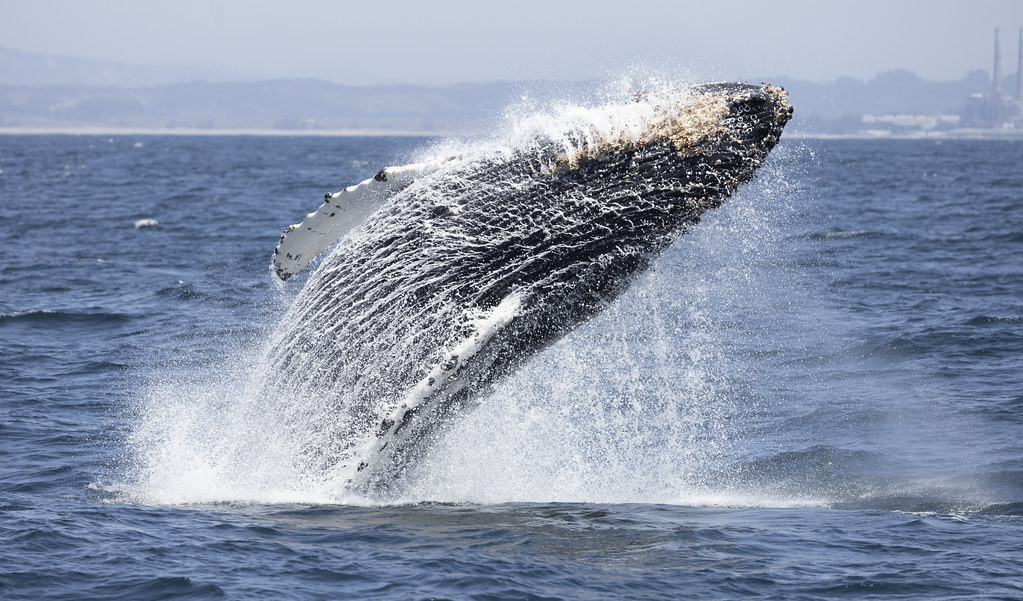
Whale Wonders: The Symphony of the Deep and its Meaning
From the playful clicks of sperm whales to the haunting, elaborate songs of humpbacks, the ocean's giants are maestros of acoustic communication. When you consider the sheer scale of the information being transmitted across vast oceanic distances, you have to wonder: is this just noise, or is it a truly sophisticated form of complex animal language? My gut tells me it’s the latter, and the research backs it up.
Let's talk about humpback whales. Their songs are legendary – complex, hierarchical structures that can last up to 20 minutes and be repeated for hours. Pioneering work by Dr. Roger Payne in the late 1960s first brought these incredible vocalizations to public attention, showing them to be far more than random sounds. A humpback song consists of themes, which are made up of phrases, which in turn are built from units. This layered structure, where smaller components combine to form larger, meaningful ones, is strikingly reminiscent of human linguistic or musical syntax.
But it gets even wilder. These songs aren't static. Entire populations of humpbacks can learn and transmit completely new songs across vast ocean basins, often adopting a new "hit" song from another population in a matter of years. This cultural transmission, this rapid evolution of complex vocalizations, isn’t just imitation; it suggests a deep social learning capacity and a potential for encoding new information within an existing structural framework. How do they do it? Is there a shared syntax for these evolving melodies?
Orcas, or killer whales, offer another incredible window into complex communication. Different pods of orcas have distinct "dialects" – unique sets of calls and whistles that are passed down through generations within their family groups. These dialects are so specific that scientists can often identify which pod an individual belongs to just by listening to its calls. These vocal traditions are crucial for group cohesion, coordinating hunting strategies, and even recognizing relatives.
The surprising truth: Whale songs, particularly those of humpbacks, display a hierarchical structure with repeating patterns and variations that some researchers argue function analogously to grammatical rules, where the "meaning" isn't just in the individual sound but in its place within the sequence. Dr. Shane Gero's research on sperm whale "codas" – rhythmic patterns of clicks – has shown that these serve as unique group identifiers, almost like a communal password, and can be combined in different ways for various social contexts. This suggests not just referential calls but combinatorial communication – combining discrete elements to create new meanings.
Here’s why it matters: If whales are maintaining and evolving complex vocal structures over time, and if those structures dictate how information is conveyed and understood within their societies, it suggests a profound level of cognitive organization. It means their communication isn't just about simple signals; it's about structured information transfer, cultural identity, and potentially, shared narratives of their underwater world. It challenges us to reconsider how much of what we call "language" is truly unique to humans and how much is a fundamental outcome of complex social intelligence.
Elephant Eloquence: Whispers, Rumbles, and Referential Calls
From the majestic savannas of Africa to the dense forests of Asia, elephants communicate in ways that are often beyond the range of human hearing, yet incredibly sophisticated. These gentle giants, with their intricate social structures and renowned memory, are masters of a communication system that blends powerful vocalizations with subtle body language. It's truly fascinating how a creature so large can communicate with such nuanced "whispers" and "rumbles."
Elephants primarily communicate through a wide range of calls, many of which are infrasonic – sounds below the threshold of human hearing. These low-frequency rumbles can travel for miles, allowing herds to stay in touch across vast distances. Dr. Joyce Poole, a leading elephant researcher, has spent decades documenting these calls, categorizing different rumbles and what they seem to convey: alarm, greeting, mating, even calls for a lost calf. Imagine the deep, resonant communication happening constantly around us, unheard, yet forming the backbone of their complex societies.
But it's not just about generalized rumbles. Research led by Dr. Caitlin O'Connell-Rodwell at Stanford University has shown that elephants use specific alarm calls not just for "danger," but for distinct threats. For instance, they have different rumbles and trumpets when they encounter Maasai warriors (a known threat) versus honeybees (a significant nuisance that can cause injury). This is crucial because it demonstrates referential communication – using a specific signal to refer to a specific external object or event, much like our words "bee" or "person."
The surprising truth: Elephants produce distinct, learned calls that act as specific referents for different predators or even individual members of their species. Studies have indicated they can identify individual humans by voice and differentiate between different human languages, associating specific voices with danger or safety. They also appear to use specific calls to greet or identify particular individuals within their herd, not just making a generic "hello" sound, but potentially something akin to a specific name or identifier for a particular elephant they are addressing.
Here’s why it matters: The ability to use distinct signals to refer to specific things in the environment, and even specific individuals, is a foundational element of what we consider language. It shows that elephant communication is not simply an emotional outpouring but a structured system for conveying precise information about their world. This level of referentiality, combined with their learning capacity and complex social bonds, suggests that their calls, when properly strung together, might convey a level of detail and meaning that approaches rudimentary sentence structure, albeit in their own unique infrasonic "dialect." It forces us to ask: what other specific messages are being whispered through the earth, just beyond our perception?

Defining the Line: What *Is* Complex Animal Language?
Here's where the rubber meets the road. When we talk about "complex animal language" and ask if animals speak in "sentences," what exactly do we mean? It's not enough to say animals communicate – every living thing does. The sticky wicket is whether their communication possesses the core properties we associate with human language: syntax, semantics, arbitrariness, displacement, and recursion.
- Syntax: This is the big one for our discussion. It's about rules governing how words or symbols are combined to form phrases and sentences, where the order matters and changes meaning. "Dog bites man" means something different from "Man bites dog."
- Semantics: The meaning associated with words or symbols. A specific call always means "leopard" or "food."
- Arbitrariness: The symbol itself doesn't inherently resemble what it refers to. The word "tree" doesn't look like a tree.
- Displacement: The ability to communicate about things not present in the immediate time or space (e.g., "the food we found yesterday").
- Recursion: The ability to embed phrases within other phrases, allowing for infinite expression from finite elements (e.g., "This is the dog that chased the cat that ate the mouse...").
Most animal communication systems demonstrate aspects of semantics (referential calls) and often arbitrariness. But syntax, displacement, and especially recursion, are the really tough nuts to crack. While vervet monkeys have specific alarm calls for "eagle," "leopard," and "snake," and even respond appropriately, these are generally considered fixed calls, not elements that can be recombined to create new meanings based on order. This is the difference between a warning signal and a sentence like "The eagle flew over the tree, but the leopard is closer."
The surprising truth: The biggest hurdle in proving true "sentences" in animals isn't just hearing distinct calls, but demonstrating that animals consciously manipulate the *order* of those calls to systematically change the meaning, a process known as compositionality. When scientists talk about complex animal language, they're searching for evidence that an animal can understand, for example, that the sequence "food" then "run" means "run towards the food," but "run" then "food" means "run away from the food." It's not just about a varied vocabulary; it's about a varied grammar.
Here’s why it matters: This precise definition is crucial because without it, we risk anthropomorphizing animal behaviors, projecting human linguistic capabilities onto them without rigorous evidence. It forces us to develop incredibly clever experiments to truly test for syntactic understanding, rather than just impressive communication. The debate isn't about *if* animals communicate effectively – they clearly do – but *how* closely their communication systems mirror the structured, generative power of human language.
The Tools of the Trade: How Scientists Are Listening In
Imagine trying to understand a conversation happening in a bustling foreign market, in a language you don't know, with half the words spoken in a frequency you can't even hear, and the other half whispered across miles. That's a bit like what scientists face when studying complex animal language. It's an enormous challenge, but thankfully, our technological toolkit is becoming incredibly powerful, allowing us to "listen in" with unprecedented detail.
The field of bioacoustics is at the forefront of this effort. Researchers use highly sensitive hydrophones (underwater microphones) and specialized terrestrial microphones to record vast amounts of animal vocalizations. But recording is just the first step. The real magic happens with sophisticated analysis software that can sift through hours, days, even years of recordings to identify patterns, classify different call types, and track individual vocalizations over time. This involves complex algorithms that can isolate specific sounds from environmental noise, measure frequency, amplitude, and duration, and even visualize vocalizations in spectrograms, which are like musical scores for animal calls.
One of the most exciting recent developments is the application of Artificial Intelligence (AI) and machine learning. Instead of humans painstakingly identifying patterns, AI can process colossal datasets of animal vocalizations, looking for subtle regularities and sequences that might escape the human ear or eye. These algorithms are incredibly good at finding correlations and structures, potentially revealing hidden "grammatical" rules or recurring "phrases" in animal communication that we hadn't noticed before.
Consider Project CETI (Cetacean Translation Initiative), a groundbreaking collaboration of scientists, AI experts, and engineers aiming to understand and eventually communicate with sperm whales. By deploying advanced bioacoustic sensing arrays and leveraging cutting-edge machine learning, they are building a "Rosetta Stone" for whale communication. They hope to identify the fundamental units of sperm whale codas, understand how they are combined, and ultimately discern if these combinations carry syntactic meaning. It’s an ambitious project, but one that could fundamentally transform our understanding of complex animal language.
The surprising truth: Modern AI and machine learning algorithms are now capable of identifying and analyzing complex, sequential patterns in animal vocalizations at a scale and speed far beyond human capacity, potentially uncovering previously hidden syntactic structures. These tools don't just record; they help us hypothesize and test whether specific sequences of calls function as true "sentences" or combinatorial units. It's like having an infinitely patient and perceptive listener on your research team.
Here’s why it matters: This technological revolution isn't just about collecting more data; it's about processing that data in ways that allow us to ask entirely new questions about animal cognition. If AI can identify consistent "grammatical" rules or meaningful combinations within animal communication, it could provide the strongest evidence yet for genuine complex animal language. We're moving from simply observing communication to actively attempting to decipher its underlying linguistic structure, opening the door to truly understanding another species' "thoughts" for the first time.

Beyond the Buzz: Why This Conversation Matters for Us
Okay, so we're diving deep into clicks, whistles, rumbles, and the elusive concept of syntax in animals. But why does any of this truly matter for us, beyond the sheer scientific wonder? Why should *you* care if an elephant uses a specific call for a bee versus a human, or if a dolphin can understand word order?
I believe the implications are profound, touching on everything from conservation ethics to our very understanding of what it means to be intelligent. First, let's talk about conservation. If we truly understand that a species communicates in a complex, information-rich manner – if they have their own sophisticated forms of "discourse" – it elevates their status in our minds. It makes their loss even more tragic. Imagine losing an entire library of knowledge, an entire culture, simply because we couldn't understand their "language." Protecting their habitats and mitigating threats becomes not just about preserving biodiversity but about safeguarding unique forms of sentient life and potential intelligence.
Then there's the ethical dimension. If animals possess even a rudimentary form of syntax, if they can communicate specific thoughts or even intentions, it demands a rethinking of how we treat them, particularly those in captivity or those we interact with in the wild. Our ethical responsibilities expand when we recognize that we might be sharing the planet with other beings capable of structured thought and complex social interaction.
And let's not forget the sheer scientific breakthrough. Understanding complex animal language could offer unparalleled insights into the evolution of language itself, including our own. If other species have developed forms of syntax, it could reveal universal principles of communication or suggest alternative evolutionary pathways to linguistic complexity. It might help us answer fundamental questions about how brains process and generate structured information.
It's also about humility and expanding our worldview. For too long, humanity has held the exclusive patent on "language" and "intelligence" as we define it. Discovering that other species operate with similar cognitive structures, even if expressed differently, forces us to shed our anthropocentric biases. It pushes us to acknowledge that intelligence and communication can manifest in countless, beautiful, and unexpected ways across the animal kingdom.
The surprising truth: Acknowledging and actively researching the possibility of complex animal language could fundamentally change our perception of animals, transforming them from mere instinct-driven creatures into sophisticated communicators with rich inner lives and social cultures. It's not just about what they can say, but what that ability reveals about their entire existence and cognitive world.
Here’s why it matters: This isn't just a niche scientific pursuit. It's a journey into understanding our fellow inhabitants of Earth, prompting us to ask deeper questions about sentience, consciousness, and the very definition of being. It challenges us to listen more closely, think more broadly, and act more responsibly towards the diverse voices that populate our planet.
Key Takeaways
- Dolphins use signature whistles akin to names and show an ability to process sequential information, suggesting nascent syntactic understanding.
- Whale songs, particularly humpback and orca vocalizations, exhibit complex hierarchical structures and cultural transmission, hinting at grammar-like rules.
- Elephants utilize infrasound and specific referential calls to distinguish between various threats and individuals, demonstrating precise information transfer.
- Defining "complex animal language" hinges on evidence of syntax, displacement, and recursion, not just general communication.
- Advanced bioacoustics, AI, and machine learning are revolutionizing our ability to detect and analyze potential linguistic structures in animal communication.
Frequently Asked Questions
Do animals truly have grammar like humans do?
While animals clearly communicate, definitive proof of human-like grammar (syntax that systematically changes meaning based on word order or structure) remains elusive. Some highly intelligent species, like dolphins, have demonstrated an ability to understand artificial syntax in controlled experiments, and whale songs show hierarchical structures. However, spontaneously producing novel, grammatically correct "sentences" in the wild, using arbitrary symbols, is where the main debate lies. Most observed animal communication consists of fixed calls or combinations, not generative grammar.
What is the strongest evidence for complex animal language so far?
The strongest evidence comes from several areas: 1) Referential communication, where specific calls refer to specific objects or threats (e.g., vervet monkeys, elephants differentiating predator calls). 2) Signature whistles/names in dolphins, demonstrating individual identification. 3) Hierarchical structure in whale songs, analogous to musical or linguistic syntax. 4) Experiments with trained animals (e.g., apes learning sign language or symbol boards) that show an understanding of symbol order and combination, though debates persist on whether this constitutes true language or sophisticated operant conditioning.
Can we ever really "talk" to animals?
Direct, complex conversation like humans have is likely a distant dream, if even possible, due to fundamental differences in cognitive structures and sensory perception. However, ongoing projects like CETI (Cetacean Translation Initiative) are making significant strides in deciphering animal communication. By understanding their "vocabulary" and potential "grammar" through AI and bioacoustics, we might eventually be able to send simple, meaningful messages and receive interpretable responses. It's less about human-to-human style conversation and more about interspecies understanding through their existing communication systems.
The journey to understand complex animal language is one of the most exciting scientific endeavors of our time. It pushes the boundaries of our knowledge, challenges our assumptions, and deepens our appreciation for the incredible diversity of intelligence on Earth.
Stay curious, stay informed, and make sure to follow @factfactory57 for more surprising facts and expert insights into the amazing world around us!
Related reading
- 🐾 Wild Animal Facts That Sound Fake (Real Behavior): A Verified Fact Worth Knowing
- 🐾 Wild Animal Facts That Sound Fake (Real Behavior): A Verified Fact Worth Knowing
- 🐾 Wild Animal Facts That Sound Fake (Real Behavior): A Verified Fact Worth Knowing
- 🐾 Wild Animal Facts That Sound Fake (Real Behavior): A Verified Fact Worth Knowing
- 🐾 Wild Animal Facts That Sound Fake (Real Behavior): A Verified Fact Worth Knowing
- 🐾 Wild Animal Facts That Sound Fake (Real Behavior): A Verified Fact Worth Knowing
- 🐾 Wild Animal Facts That Sound Fake (Real Behavior): A Verified Fact Worth Knowing
- 🐾 Wild Animal Facts That Sound Fake (Real Behavior): A Verified Fact Worth Knowing